
ONTARIO POULTRY RESEARCH CENTRE
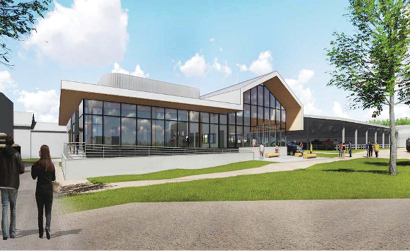
The new Ontario Poultry Research Centre in Elora is designed to provide the next generation of tools and knowledge to support the province's 432 egg farmers, as well as over 1,200 chicken and turkey producers.
Built as a partnership between the Ontario government, the University of Guelph, and the four poultry regulatory boards, the facility is expected to be completed by 2026 and will join other state-of-the-art research centres for beef, dairy and swine already established at the Elora Research Station.
Food Safety and Disease Prevention
Priorities: Control of Salmonella Enteritidis and rapid detection of emerging diseases like Avian Metapneu-movirus (aMPV) or Highly Pathogenic Avian Influenza (HPAI).
Why: Protecting the food supply is critical for public trust. New facilities allow for "One Health" research—study-ing the intersection of animal health, human health, and the environment—to prevent zoonotic disease outbreaks.
Production Efficiencyand Innovation
Priorities: Testing "precision agriculture" tools like robotics, automation, and advanced lighting/ventilation. Why: Farmers face rising input costs and labour shortages. The centre provides a "production scale" setting where high-risk technologies can be proven before they are adopted on commercial farms.
Sustainability and Environmental Stewardship
Priorities: Improving feed efficiency to reduce waste and researching alternative uses for poultry manure. Why: This aligns with the province's Grow Ontario strategy, which aims to increase domestic food production by 30% while reducing the sector's carbon footprint.
Human Nutrition and"End of Flock" Management
Priorities: Exploring non-food uses for eggs and improving the care of hens at the end of their production cycle. Why: Maximizing the value of every bird and every egg ensures economic resilience and aligns with ethical standards for animal care throughout their entire lifespan.
“ The new Ontario Poultry Research Centre in Elora is the future of farming. This elite partnership scales innovation for 1,600+ poultry producers, delivering the high-tech tools and insights needed to lead the global market.” Scott Helps
“This is an exciting time to be in egg science and research.” Lisa June, Research Director
Key Research Priorities and Reasons For Selection

Animal Health and Welfare
Priorities: Focus on bird behaviour in aviary systems, gut and bone health in alternative housing, and managing feather pecking.
Why: As the industry transitions toward enriched and cage-free systems (required by the national Code of Practice), research is needed to ensure these environments do not lead to new health issues like increased keel bone damage or